

Explore! 2026: Five fresh ideas shaping the future of construction
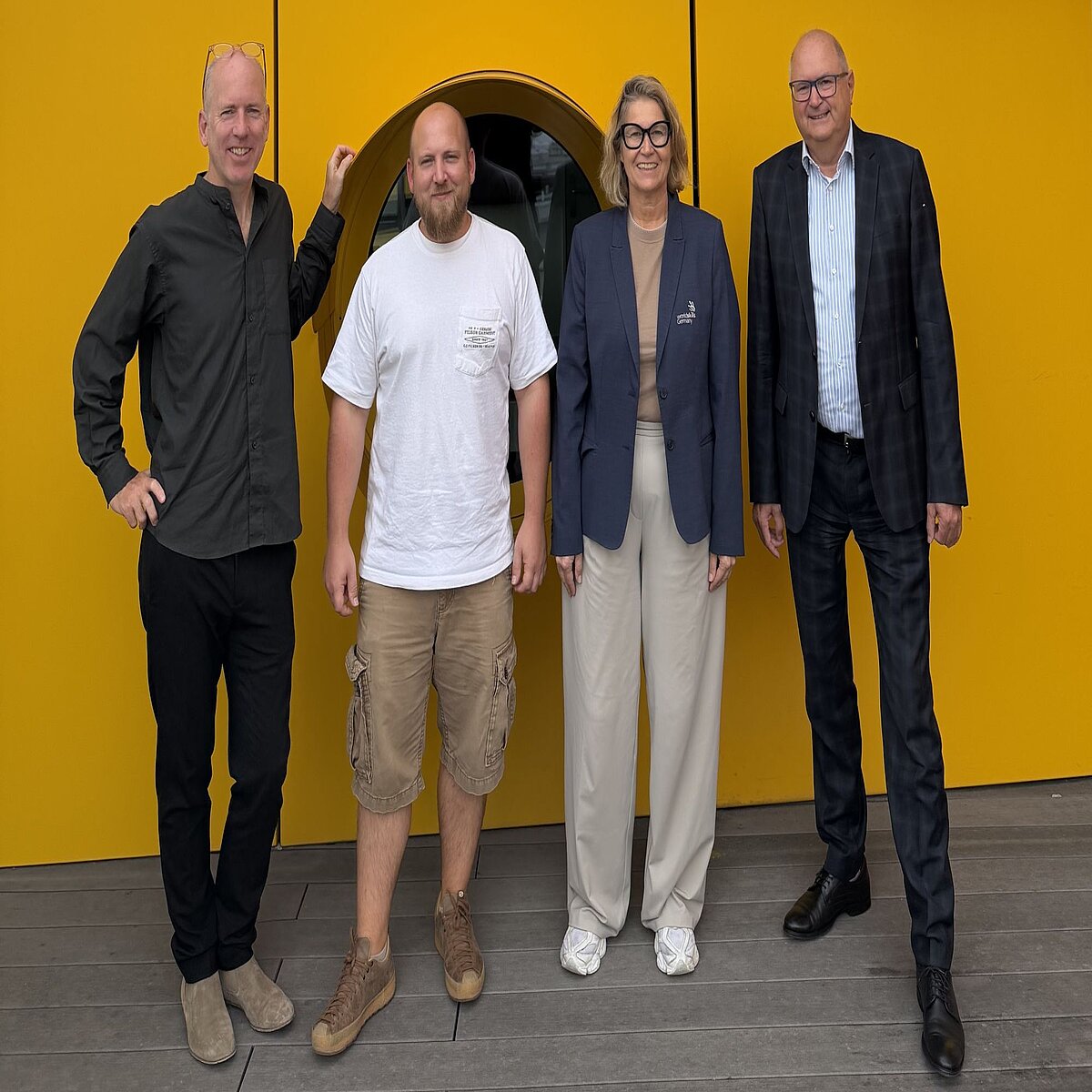
“Through Explore!, we have created a funding program that provides a platform for young, research-driven talent,” says Prof. Ralf Pasel, member of the Architecture Board of Trustees at the Sto Foundation. “We support ideas at an early stage to explore their potential. Ideas that otherwise often cannot be further developed or integrated into a larger research framework. The selected projects deliberately showcase a wide range of disciplines and geographic locations—from Chile to Denmark to Germany—and thus reflect the foundation’s objectives.”
The funded projects marking the launch of this new initiative range from materials development and construction practices to structural engineering and digitalization. What unites them is the goal of gaining insights for resource-efficient, circular construction practices. “New answers to questions about construction often emerge at the intersections of different disciplines,” says Ralf Pasel. “Explore! creates space for this exchange and for testing concrete ideas.”
Debris Interlock: Reusing Demolition Debris for Load-Bearing Slabs
At the Technical University of Darmstadt, the team led by Sandro Siefert and Prof. Oliver Tessmann is investigating how mineral-based demolition debris can be directly reused for CO₂-intensive horizontal structural elements. To achieve this, irregular concrete rubble is captured via 3D scanning, digitally cut to size, and assembled into load-bearing ceiling structures using topological interlocking. A full-scale prototype is intended to validate the digital and physical fabrication process under real-world conditions.
Mycelium-Based Insulation Panels for the Finishing Trades
Johannes Paganetty from the Munich Municipal Technical School for Paint and Coating Technology is investigating how mycelium-based insulation panels can be properly coated with plaster and paint systems. The project examines the entire processing chain: from the production of test specimens made of fungal mycelium and plant-based waste materials, through adhesion tests, to the coating process. The aim is to develop a practical guide to help contractors assess the load-bearing capacity and suitability for coating of these bio-based substrates.
“I am very pleased that, in Johannes Paganetty, we have an award winner from the painting and finishing trade,” says Inge Totzke, member of the Sto Foundation’s Board of Trustees for the Trades. “The project brings the perspective of the tradespeople who actually carry out the work into the research on a new building material.”
HolSDeck: Load-Bearing Ceilings Made of Wood and Rammed Earth
The Karlsruhe Institute of Technology is developing HolSDeck, a prefabricated ceiling system made of wood and rammed earth. Rather than serving solely for building physics purposes, the rammed earth is designed to actively contribute to load transfer. The team led by Prof. Riccardo LaMagna and Tamara Haußer is testing various connecting elements, first on small components and then on full-scale (1:1) ceiling components. The goal: to reduce the proportion of wood, recover materials by type, and develop a recyclable ceiling system.
Robot-Manufactured Facades Made from Seashells
At the Royal Danish Academy in Copenhagen, the team led by Prof. Paul Nicholas is investigating facade panels made from seashells, seaweed, and biopolymers. Here, historical construction methods meet robotic manufacturing. By deliberately varying material densities and surface structures, the panels are designed to both drain rainwater and store it for cooling purposes. The researchers are comparing the prototypes under real-world weather conditions on a test facade.
pMFA: Evaluating Material Cycles as Early as the Design Phase
A Chilean research team at the Universidad Católica de Santiago de Chile, led by Prof. Renato D’Alençon, is developing pMFA—a BIM-integrated Prospective Material Flow Analysis method—for a forward-looking material flow analysis that actively incorporates circular material flows as early as the initial conceptual phase of project planning. The method is intended to show architects, even during the design phase, how material choices will affect demolition, reuse, and future material flows in the long term. The project aims to develop a digital dashboard that allows different construction methods to be compared over a 50-year period.
New Funding Initiative Bridges Theory and Practice
Through Explore!, the Sto Foundation supports interdisciplinary research projects related to construction that translate scientific findings into practical applications. The program is aimed at professionals and emerging talent in the fields of architecture, interior design, civil engineering, building physics, construction chemistry, bioengineering, and materials research. Technicians, master craftspersons, and skilled workers in the building finishing trades are also eligible to apply. The focus is on projects that further develop and provide scientific support for new materials, manufacturing and construction methods, existing buildings, or digital planning and construction processes.
“For more than 20 years, the Sto Foundation has been supporting trainees, particularly in the skilled trades and architecture,” says Carlo Stotmeister, vice chair of the foundation’s board. “With Explore!, we are expanding the foundation’s target groups and supporting curious young people with initial grants. This enables them to pursue research questions related to the further development of the construction industry, for example, as part of their semester projects.”
High resolution image files are available for download here.