

What will the built environment of tomorrow look like? The Sto Foundation is looking for answers.
“Explore! Rethinking Construction” is a funding programme of the Sto Foundation for interdisciplinary research projects related to the built environment. It is open to academics, skilled tradespeople, and institutions, with a total funding volume of €80,000. The application deadline is 31 July 2026.
With this programme, the Sto Foundation expands its existing funding areas of Architecture and Craftsmanship to include interdisciplinary research. Explore! creates opportunities for new perspectives, collaboration, and innovation across the construction sector.
Who can apply?
The call is aimed at individuals and organisations seeking to rethink and advance the way we build. Applications are welcome from academic professionals and emerging talents in architecture, interior architecture, civil engineering, building physics, construction chemistry, bioengineering, materials science, and research institutes specialising in building materials.
At the same time, Explore! is open to technicians, master craftspeople, and skilled professionals from the finishing and fit-out trades.
Topics and Requirements: How a Project Qualifies for Funding
The Sto Foundation supports projects that explore new materials, develop innovative manufacturing and construction methods, rethink existing buildings, and advance digital planning and construction processes.
To be eligible, projects must be based at a non-profit institution and be supported by scientific supervision. Priority is given to ideas that connect research and practical expertise while providing tangible impulses for the transformation of the built environment.

"At the center is the curiosity to ask questions, think ideas further, and develop concrete solutions for practice from them. The program connects and expands the previous funding areas of architecture and craft with the relevant component of interdisciplinary research. In this way, we create space for exchange and new impulses."
Prof. Ralf Pasel
Foundation Board for Architecture

FAQ
Exploration is the Sto Foundation’s research funding area for interdisciplinary projects related to the built environment. It complements the existing Architecture and Craftsmanship funding programmes by focusing specifically on research that combines different approaches and promotes the transfer of knowledge into practice.
The programme addresses a broad range of applicants—from universities and research institutions in architecture, civil engineering, building physics, and materials science to skilled tradespeople, technicians, and master craftspeople from the finishing and fit-out sector.
The Sto Foundation supports research projects that address practical challenges in construction and the built environment, including new materials, energy optimisation, the renovation of existing buildings, and digital planning processes. A key criterion is the project’s potential to transfer knowledge into practical application.
In 2026, we are providing a total funding amount of 80,000 euros.
Projects must be hosted by a non-profit institution and be supported by scientific supervision. This ensures that funding is invested in well-founded projects whose findings can have a lasting impact.
Exploration deliberately brings together different disciplines, recognising that new insights often emerge where scientific research and practical craftsmanship intersect. Through this approach, the Sto Foundation creates opportunities for exchange, collaboration, and ideas that make an impact—from the laboratory to the construction site.
Meldungen zum Bestenwettbewerb
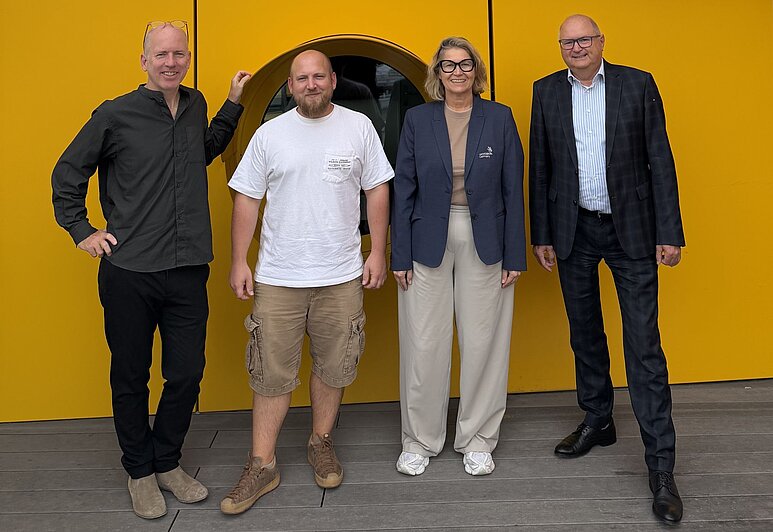
Explore! 2026: Five fresh ideas shaping the future of construction
The Sto Foundation has selected the projects to be funded under its new program, “Explore! Rethinking Construction.” The Sto Foundation received numerous exciting ideas from around the world, and the jury selected five of them at its meeting in mid-September. The selected teams are researching how to reuse demolition…
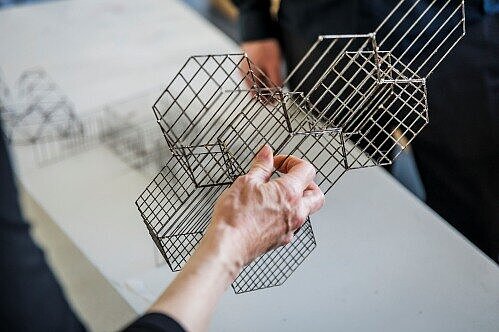
Sto Foundation Launches New Funding Programme for Research in the Built Environment
How can we build in ways that are resource-efficient, climate-responsive, and economically viable? With its new funding programme, Explore! Advancing the Future of Building, the Sto Foundation supports research projects that seek answers to some of the most pressing challenges facing the built environment today. The…